
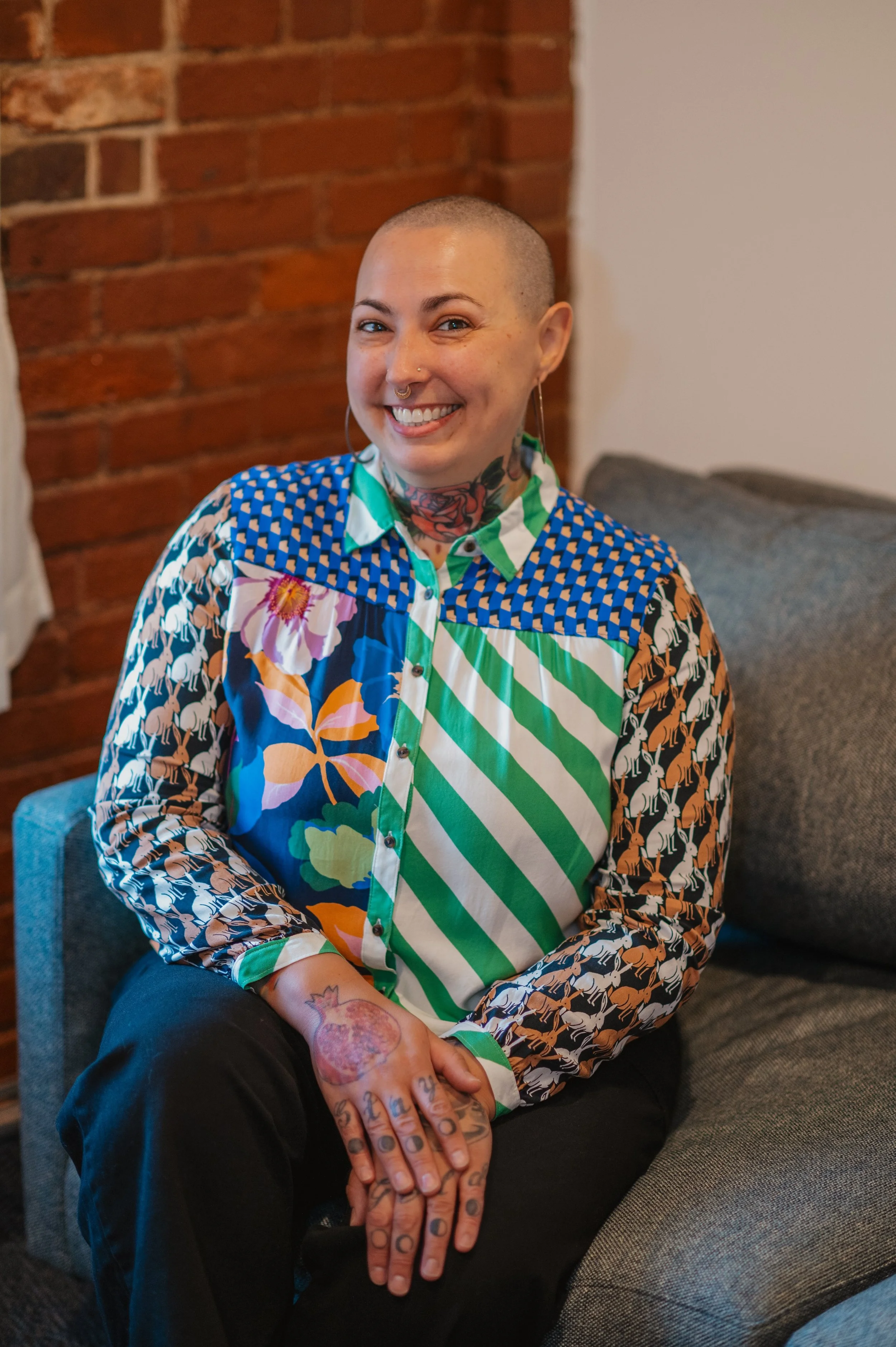
Lee Start, LICSW, LADC
About
Pronouns: they/them
Occupation and Specialty: Therapist
Location (Clinic/hospital): Noble Tree Therapy
Location (City): Twin Cities
Offers Telehealth: Yes
Contact Information: https://www.nobletreetherapy.com/about/lee-start-therapist-nobletree-therapy-yxfhj
Bio:
I provide outpatient therapy services for individuals, couples, adult family dynamics, and ENM relational dynamics. I specialize in supporting LGBTQIA+ individuals and allies, and those who have experienced religious trauma, and impact from a high control group (religious or nonreligious), attachment trauma, and systemic and complex trauma in general. I also specialize in somatic work, parts work, and emotion-based work. I am certified in AIR Network for complex trauma and dissociation, am currently a student in the Somatic Experiencing International program at the Intermediate level, and trained in AEDP.
Approach to care
What does it look like for you to provide care to patients in larger bodies? How is, or isn’t, your approach different from how you care for patients in smaller bodies? If you work with children, how is or isn’t your approach different when working with children?
Working with clients in larger bodies includes validating the systemic harm and oppression experienced moving in our ableist and fat phobic world, and the impact this can have on access, and mental health.
What is your perspective on how weight is or is not related to health?
Weight is not a marker of health, losing weight can often be a marker of decline in mental or physical health. As a clinician I recognize people can have complicated relationships with their bodies for a variety of reasons, and can have complicated relationships with food for a variety of reasons. I support clients where they are at, and validate there is no "correct" body other than the one they are in!
Finish this sentence: “Fat people are…”
just people!
How do you, your clinic, and the healthcare system you work in use BMI (i.e BMI cutoffs for accessing certain services, BMI on charts and printouts, etc)? Is this flexible?
N/A
If a patient declines to be weighed, how do you and/or your staff proceed?
N/A
If a patient declines to discuss weight loss, nutrition, and/or exercise, how do you proceed?
N/A
Do you offer weight loss as a service, and if so, how much of your practice is this? What do you do if a patient requests your assistance with losing weight?
I do not. If a patient wants to lose weight, that is something we will explore therapeutically. I fully support client autonomy, and also do not believe it is ethical to have weight loss as a treatment goal. This is territory I am fully comfortable exploring with clients, meeting them where they're at with compassion and support in helping them explore how they know what their bodies needs are.
What does the physical accessibility of your office space look like? What kinds of accommodations are present for people in larger bodies? Are there things you wish were in place that are currently not?
We have accessible parking and an elevator, there is a ramp so folks can fully avoid stairs if needed. I have sturdy seating that can accommodate all bodies.
What do you do to allow fat people to feel comfortable and welcome in your office?
Treat them exactly like any other client by believing their lived experience.
If you’d like to use this space to talk about any identities (gender, race, size, sexuality, etc.) you hold and how this relates to your care, please do so.
I am in a small-fat body and recognize this as a privilege. I am able-bodied, non-binary, and queer. I have lived experience with eating disorders.
Profile last updated April 2026