
Heather Holt, MSW, LICSW
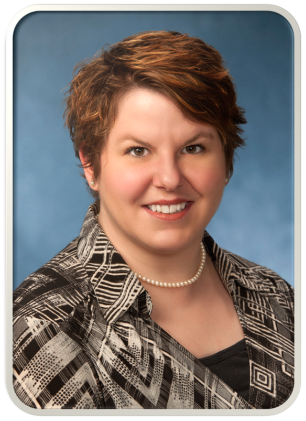
About
Pronouns: she/her/hers
Occupation and Specialty: Therapist
Location (Clinic/hospital): Brave Choices, Inc.
Location (City): All of Minnesota virtually and located in Saint Paul, MN
Offers Telehealth: Yes
Contact Information: www.bravechoicesmn.com, heather@bravechoicesmn.com, 612.889.7517
Bio: I provide mental health therapy for individuals ages 18+ virtually. I am trained in Sensorimotor Psychotherapy Level I and I am a Certified Clinical Trauma Professional Level II (CCTP-II).
I’m a clinical social worker and the owner of Brave Choices, Inc. I’ve been practicing since 2010 and am passionate about supporting people who have experienced trauma and/or are living with chronic health conditions.
I approach my work through a systems lens, recognizing that our experiences are shaped by both personal history and broader social and historical contexts. I consider how systemic forces—such as racism, sexism, ableism, discrimination, and violence—impact well-being, and I’m committed to an anti-racist, affirming approach that actively challenges these systems. I also practice from a body liberation and Health at Every Size® perspective, honoring the complexity of each person’s relationship with their body and health. I bring this lens into my work with clients from diverse racial, ethnic, socioeconomic, and cultural backgrounds, creating a space where your full identity is acknowledged and supported.
I’m a community-minded therapist who values both depth and practicality. My approach is collaborative and strengths-based—we’ll work together to address immediate concerns while building sustainable, long-term strategies for growth. I believe that how we treat ourselves shapes our relationships, our communities, and our future. You deserve a supportive, healthy relationship with yourself.
It takes a lot of bravery to seek support for life’s difficult moments—and you don’t have to do it alone. Together, we can problem-solve and move toward next steps that feel meaningful and doable for you.
Approach to care
What does it look like for you to provide care to patients in larger bodies? How is, or isn’t, your approach different from how you care for patients in smaller bodies? If you work with children, how is or isn’t your approach different when working with children?
I focus on the whole person—their lived experience, their relationship with their body, and the broader social and historical contexts that shape that relationship.
My core approach—collaborative, strengths-based, and systems-oriented—doesn’t change based on body size. All clients deserve care that is respectful, individualized, and grounded in their values. The difference is that with clients in larger bodies, I’m more explicit and intentional about naming and counteracting weight bias so that care can truly feel safe and affirming.What is your perspective on how weight is or is not related to health?
I practice from a body liberation and Health at Every Size® perspective, which means I don’t pathologize body size or assume health, behaviors, or worth based on weight.
Finish this sentence: “Fat people are…”
AWESOME!
How do you, your clinic, and the healthcare system you work in use BMI (i.e BMI cutoffs for accessing certain services, BMI on charts and printouts, etc)? Is this flexible?
N/A
If a patient declines to be weighed, how do you and/or your staff proceed?
N/A
If a patient declines to discuss weight loss, nutrition, and/or exercise, how do you proceed?
I do not assume that weight loss is necessary or appropriate as a treatment goal. Instead, I focus on what the client identifies as most important, whether that is coping, relationships, trauma, stress, or body image. I aim to understand their lived experience within the context of broader social and systemic influences, rather than centering weight. If these topics become relevant to the patient in the future, we revisit them collaboratively and only at their pace.
Do you offer weight loss as a service, and if so, how much of your practice is this? What do you do if a patient requests your assistance with losing weight?
No. I will support clients in their desire for weight loss, especially considering behavioral changes and the desire to reduce food noise if that is present.
What does the physical accessibility of your office space look like? What kinds of accommodations are present for people in larger bodies? Are there things you wish were in place that are currently not?
The waiting room and office space are all set up with physical accessibility in mind. The building is a one story office building with no steps to enter the building. The furniture has high weight limits to accommodate larger bodies with plenty of pillows and fidgets to feel comfortable. I wish that there was an ADA compliant door opener for the main building door and the office door.
What do you do to allow fat people to feel comfortable and welcome in your office?
Each client is welcome to make coffee, tea or cocoa in the waiting room upon arrival. Furniture is able to accommodate larger bodies.
If you’d like to use this space to talk about any identities (gender, race, size, sexuality, etc.) you hold and how this relates to your care, please do so.
I am a White cis/het female, disabled therapist who lives in a larger body. I honor the complexity of each person’s relationship with their body and health. I bring this lens into my work with clients from diverse racial, ethnic, socioeconomic, and cultural backgrounds, creating a space where your full identity is acknowledged and supported.
Profile last updated May 2026