
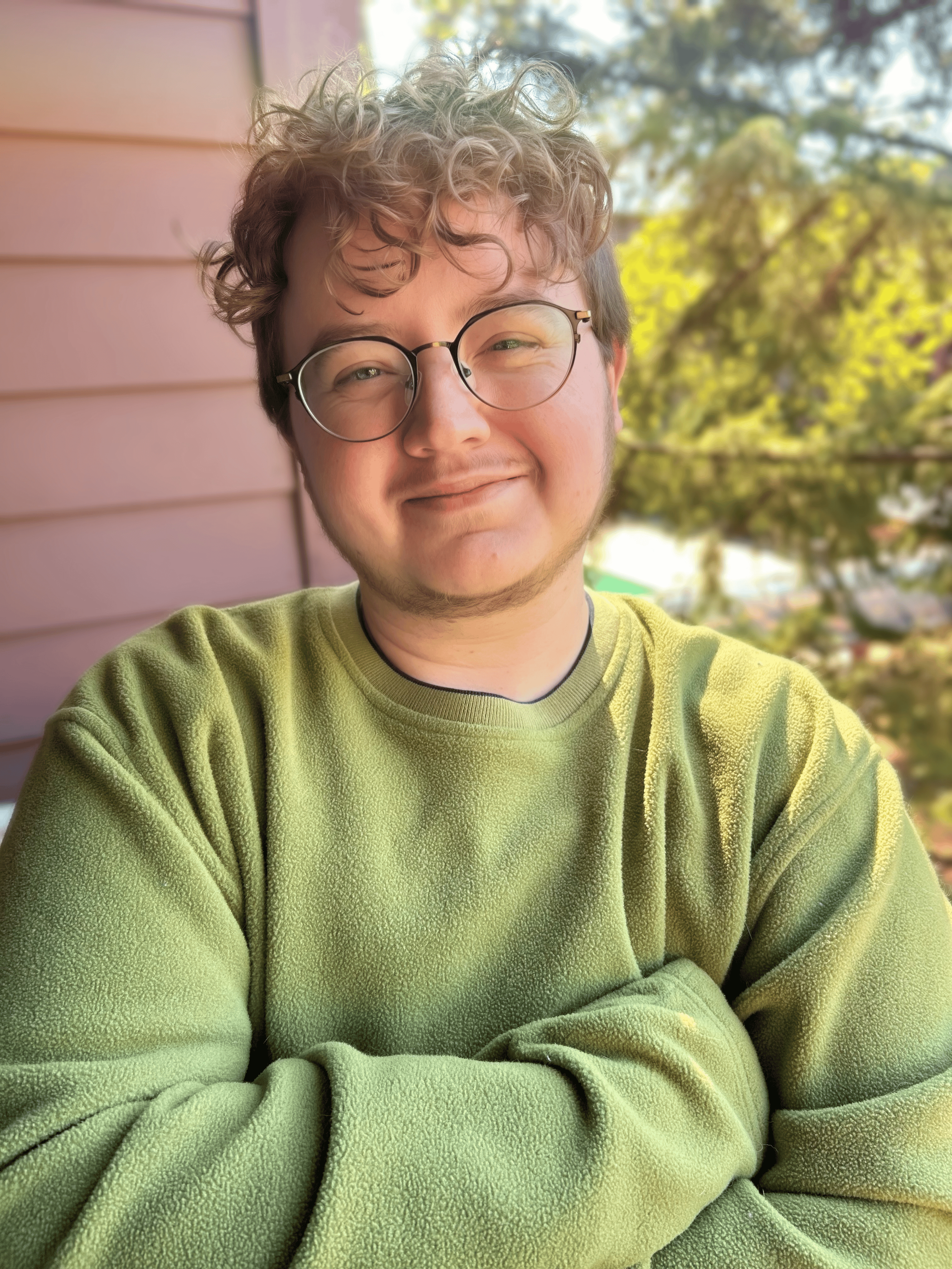
Charlie McGregor, Pre-Licensed Therapist
About
Pronouns: he/him
Occupation and Specialty: Therapist
Location (Clinic/hospital): Vibrant Life Therapy
Location (City): Minneapolis; Maplewood
Offers Telehealth: Yes
Contact Information: Email: charlie@vibrantlifetherapyclinic.com / Phone: 612-548-4657 / PsychToday: www.psychologytoday.com/us/therapists/charlie-lovejoy-mcgregor-minneapolis-mn/1764606
Bio: Healing is a personal and political process. As a transgender man, I understand how hard it is to find a provider who can see the whole picture of who you are, your identities, and your experiences. You deserve a therapist who understands that. I want to support you in building a life that feels more authentic and sustainable. After all, you are not the problem. The problem is the problem. When we can see the problem for what it is, it creates space for us to dream and work towards a better future.
I am passionate about providing care to individual adults who are LGBTQ+, BIPOC, disabled, neurodivergent, fat, kinky, and/or non-monogamous. I work through a liberational lens, which means we explore not only your personal experiences, but also how larger systems may have shaped your experiences.
Approach to care
What does it look like for you to provide care to patients in larger bodies? How is, or isn’t, your approach different from how you care for patients in smaller bodies? If you work with children, how is or isn’t your approach different when working with children?
Providing care to clients in larger bodies for me means honoring experiences and observing the stories we tell about our bodies and health. So many stories about our bodies can come from places of systemic harm and fatphobia embedded in our culture. It is important we recognize the origin of these stories so we can build new, empowered stories.
It is also important especially for fat transgender and gender-diverse folks as we can experience stress from fatphobia and transphobia. Working through this stress can help us find more joy in our bodies.
What is your perspective on how weight is or is not related to health?
I don’t see weight as an important issue of health. I see it far more important for folks to build self-compassion and empowering stories they tell about themselves and their communities. Rather than trying to build an exercise routine to lose weight, can we instead explore ways of moving our bodies that feel safe, fun, and that we actually want to do? Scenarios like these are how I like to frame exploration of health and happiness.
Finish this sentence: “Fat people are…”
deserving of healthcare providers who see them as a whole person, with their concerns taken seriously, and weight loss not being a priority.
How do you, your clinic, and the healthcare system you work in use BMI (i.e BMI cutoffs for accessing certain services, BMI on charts and printouts, etc)? Is this flexible?
N/A
If a patient declines to be weighed, how do you and/or your staff proceed?
N/A
If a patient declines to discuss weight loss, nutrition, and/or exercise, how do you proceed?
I completely understand a client not wanting to discuss such things. I would respect the client’s wishes and honor the importance of our conversation focusing on topics they want to discuss
Do you offer weight loss as a service, and if so, how much of your practice is this? What do you do if a patient requests your assistance with losing weight?
I do not offer weight loss as a service.
What does the physical accessibility of your office space look like? What kinds of accommodations are present for people in larger bodies? Are there things you wish were in place that are currently not?
Our Minneapolis office has stairs to my office; however, we also have comfortable couches for clients in both the waiting room and in the offices. We have water, coffee, and snacks available in both locations. At our Maplewood office, it is all one level, and there is a large parking lot.
What do you do to allow fat people to feel comfortable and welcome in your office?
I exist as a fat person myself in the space. We have comfortable furniture that most fat folks will likely be able to sit on. Our practice is vocal about supporting marginalized communities.
If you’d like to use this space to talk about any identities (gender, race, size, sexuality, etc.) you hold and how this relates to your care, please do so.
I am a white, fat, transgender, able-bodied man. These identities help me understand the importance of care that is political and open to discussing the harm caused by systems of oppression.
Profile last updated October 2026